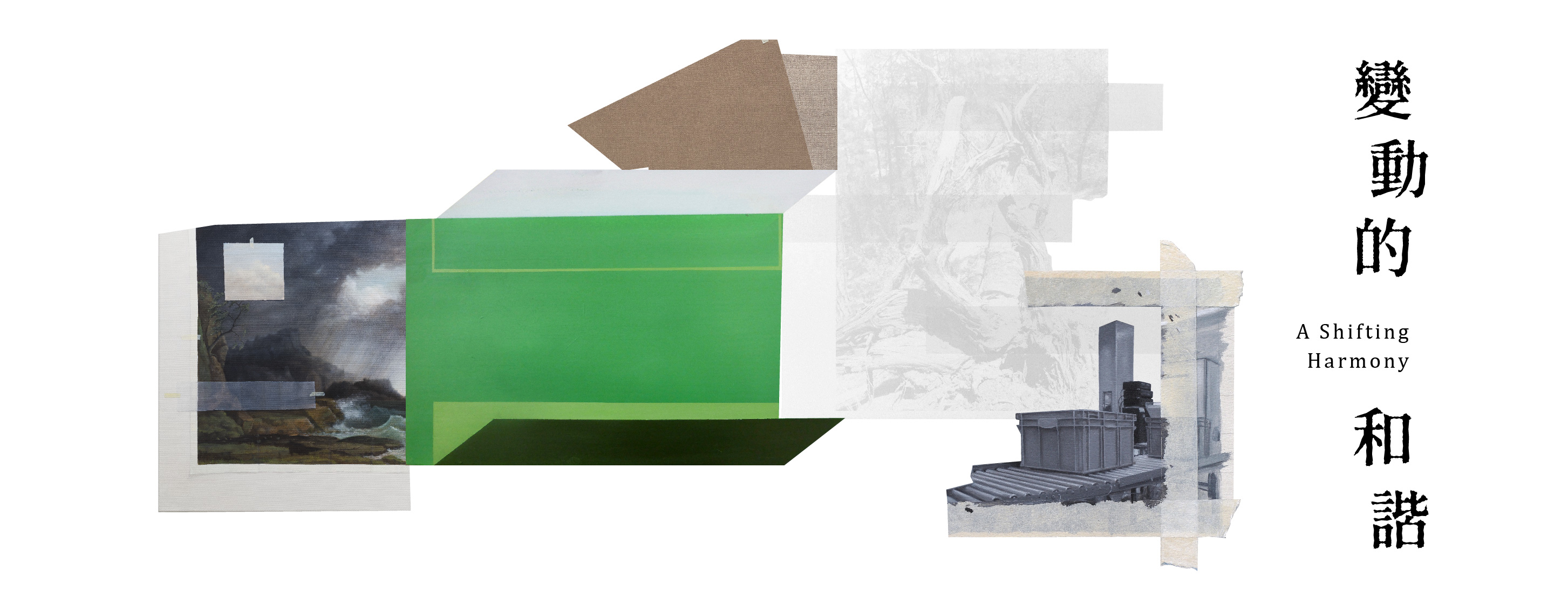
【Talk】A Shifting Harmony
Date
Venue
Pricing
Suitable for
Introduction
This lecture extends the exhibition Imaginative Reality, curated by artist Song Sheau-Ming (currently Associate Professor of the Department of Fine Arts at National Taiwan Normal University). The exhibition also features works by four other artists from different parts of the world, each exploring distinct experiences of viewing landscapes, imagery, and painting through their own works. The exhibition raises questions about whether imaginations inspired by everyday life or illusionistic styles can effectively portray contemporary realities. Additionally, it considers whether a visual perspective marked by uncertainty and fluidity can still offer a sense of perceptual harmony. For this lecture, we have invited Chen Kuang-Yi, Director of the National Taiwan Museum of Fine Arts, to serve as a discussant and offer personal insights into the artists’ works. We hope that a rich, multifaceted dialogue between the speakers will foster discussions from multiple perspectives and inspire diverse thoughts and imagination.
Program
13:45-14:00 Registration and seating
14:00-14:05 Opening remarks by the moderator
14:05-15:20 Artists Talk
15:20-16:00 Panel discussion and Q&A
Moderator
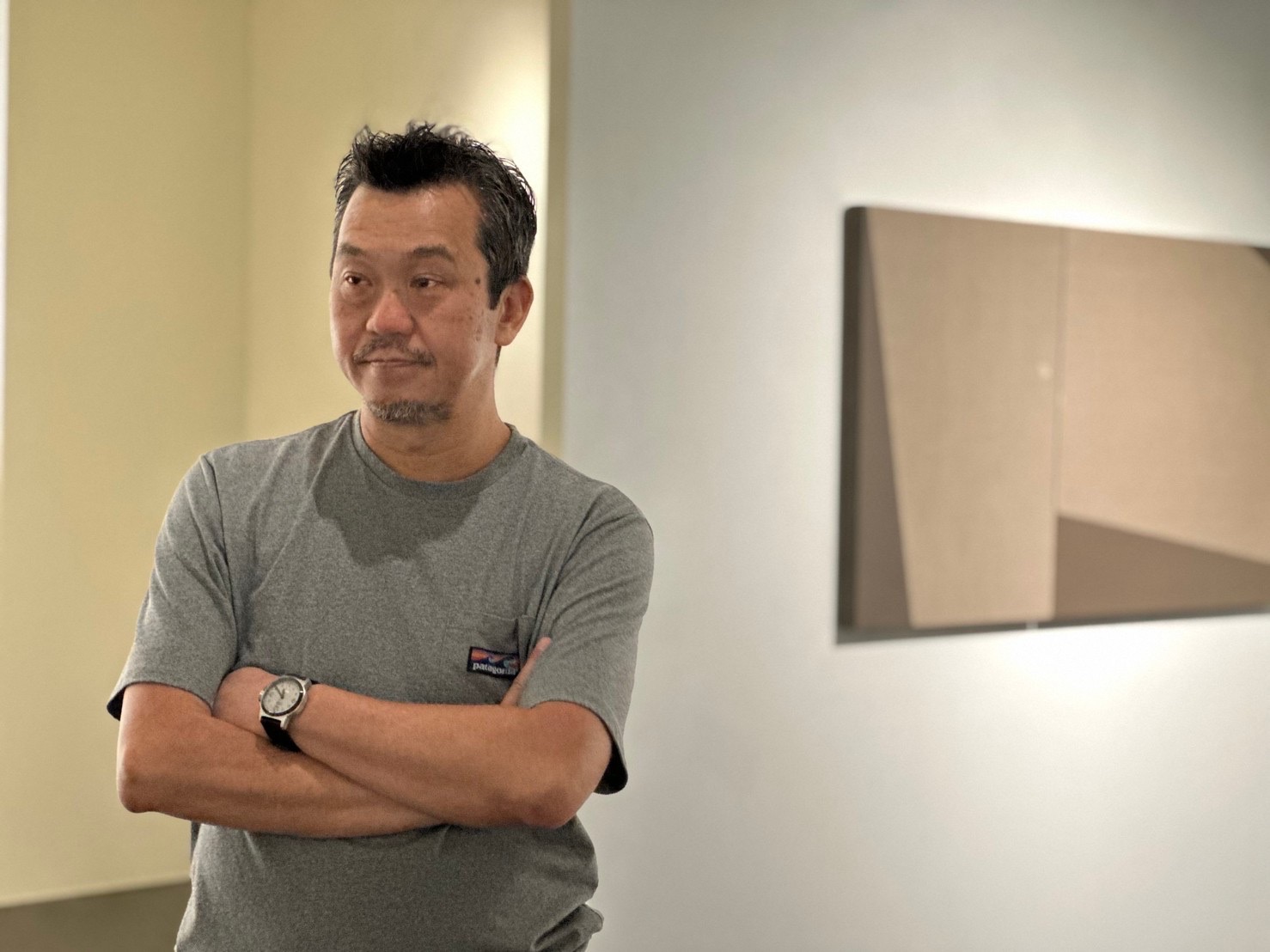
Song Sheau-Ming (curator and artist)
Song Sheau-Ming (b. 1967, Hualien, Taiwan) earned an MFA from the City College of the City University of New York in 2002 and a PhD in Visual Arts from Lancaster University’s Lancaster Institute for the Contemporary Arts in 2008. He is currently an Associate Professor in the Department of Fine Arts at National Taiwan Normal University. His work spans decades, oscillating between rational structural forms and intuitive emotion and poetry, creating an abstract aesthetic rich in spiritual depth and lyrical nuance. His exploration begins with a fundamental inquiry into the nature of images. Masking tape, an inevitable and metaphorical element in his art, functions not merely as a visual mark but as a symbol of time, transformation, and the connection between reality and illusion. Through this symbol, he addresses the limits of realism and its insufficient definition, while creating interweaving layers of internal thoughts and external landscapes through concealment and revelation.
Panelist

Chen Kuang-Yi (director of National Taiwan Museum of Fine Arts)
Born in Taipei, Chen Kuang-Yi graduated from the Department of Fine Arts at National Taiwan Normal University in 1988. Between 1992 and 2001, she earned a bachelor’s degree and a master’s degree in art history and archaeology, as well as a doctorate in contemporary art history (19th and 20th centuries) from the Université Paris Nanterre. She is now the Director of the National Taiwan Museum of Fine Arts. Her previous roles include Professor of the PhD Program in Contemporary Visual Culture at the Department of Fine Arts, National Taiwan University of Arts (NTUA); Dean of the NTUA Fine Arts College; Adjunct Professor in the PhD Program at the NTUA Department of Fine Arts; Researcher at the National Museum of History; and Adjunct Associate Professor in National Taiwan Normal University’s Department of Fine Arts. Chen also served as an Exchange Professor at the École des Beaux-Arts de Bourges and as a Visiting Scholar at the Université François-Rabelais de Tours in France. She has served as a curatorial and academic consultant for major international exhibitions featuring artists such as Millet, Van Gogh, Picasso, Miró, and Monet at the National Museum of History; Gauguin and Monet at the Taipei Fine Arts Museum; and the Pushkin Museum collection at the National Palace Museum. Her publications and essays on art history and criticism appear in various monographs, journals, magazines, and exhibition catalogs.
Artist panelists
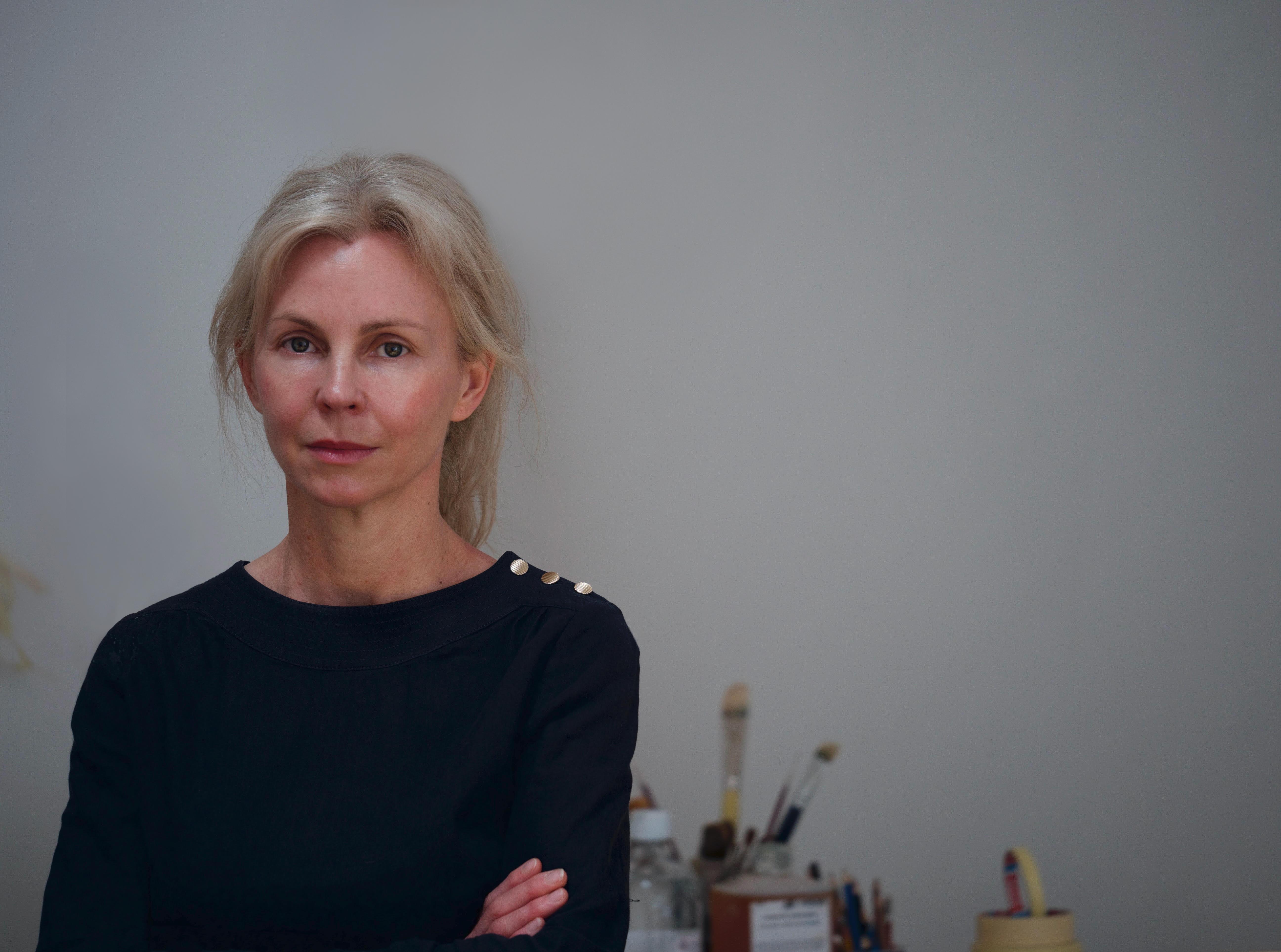
Emily Wolfe
Emily Wolfe (b. 1972, Auckland, New Zealand) earned a BFA from the Elam School of Fine Arts at the University of Auckland in 1996. She then moved to London for postgraduate studies, earning an MFA from the Slade School of Fine Art at University College London in 2000. She now lives in Oxford, UK.
Wolfe’s work, often exhibited in London and New Zealand, depicts a world that feels both familiar and surreal. In this world, remnants of classical landscapes blend with everyday objects—paper scraps, adhesive tape, and worn-out fragments. Her art is deeply attuned to the materiality of memory. The layered textures in her paintings echo layers of archaeological narrative, reflecting her early excavation and research experience at historical sites in Europe. Her palette is soft and subdued, reminiscent of the restrained beauty often found in faded photographs or antique treasures. Light in her work does more than illuminate; it is part of the narrative, casting calm shadows that suggest unspoken or unseen elements. On Wolfe’s canvases, one can detect subtle hints of unknown lives, prompting viewers to consider the slow passage of time and the stories within everyday objects. By redefining still life and landscape painting, her art transforms these genres into active dialogues among history, memory, and the present, turning her paintings into spaces for contemplation—layered, dreamlike memories that linger in the mind and evoke ambiguity.
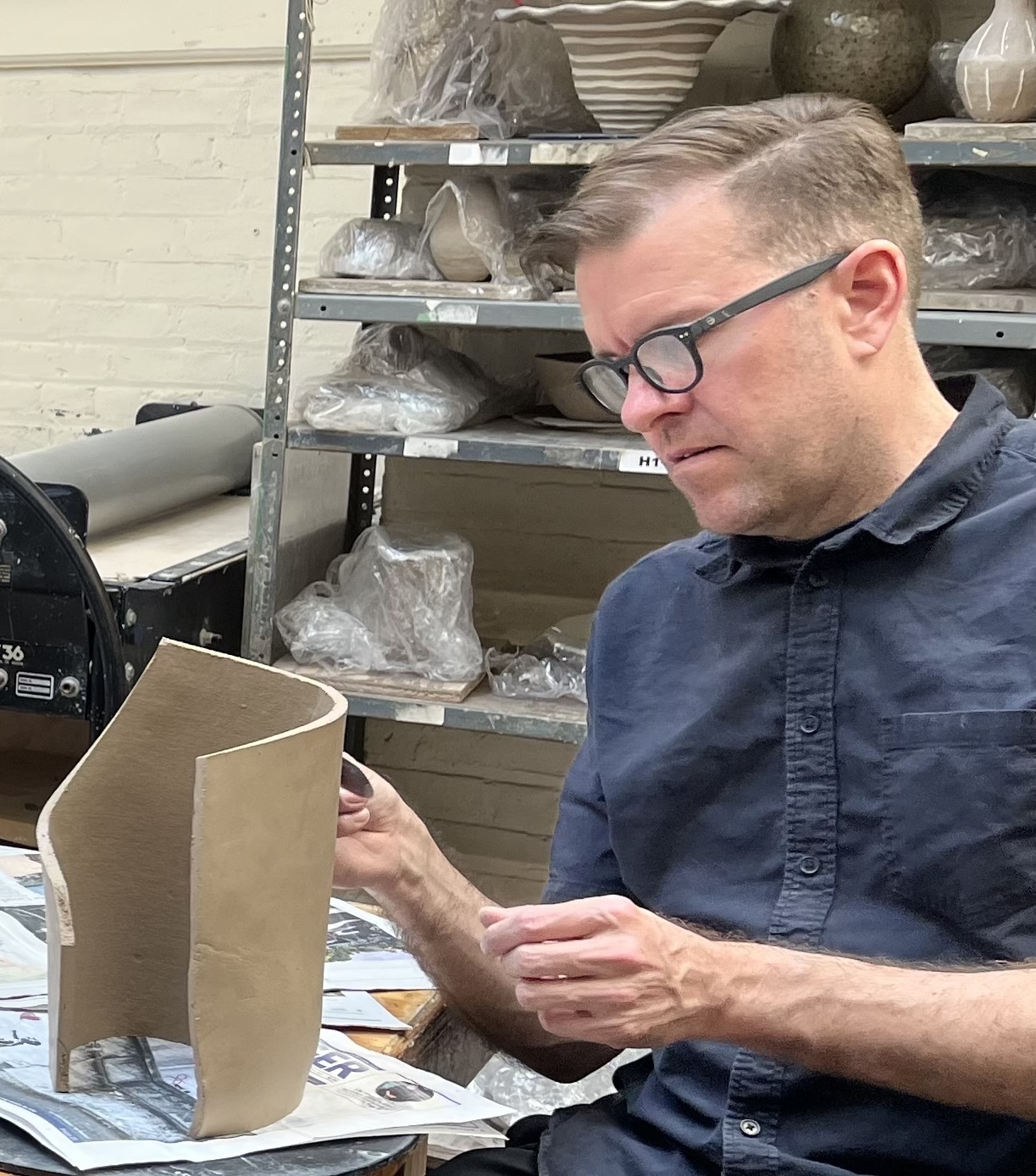
Cameron Martin
Cameron Martin (b. 1970, Seattle, USA) earned a BA in Art and Semiotics from Brown University in 1994 and graduated from the Independent Study Program launched by the Whitney Museum of American Art in 1996. He now lives in New York and is the F.H. Sellers Professor in Painting at the School of the Art Institute of Chicago.
Martin first became known for his detailed landscapes that incorporate semiotic elements. In a discussion with Amy Sillman, she remarked, “It is almost impossible to know whether they are paintings or screen prints, or printed prints, or prints with paintings over them.” Questions about where and how an image exists frequently arise in Martin’s work. In an essay analyzing Martin’s art, artist Dike Blair explored the connection between his work and time, as well as the events unfolding within his paintings: “These paintings, like all of Martin’s, are steeped in romanticism; yet just as clearly they are products of an analytic eye and mind, and a trained and restrained hand.” In 2014, Martin’s painting style shifted towards abstraction. His abstract works have been praised as “committed to the experience of painting, with unorthodox techniques, and mesmerizing surfaces.”
Nicholas Middleton
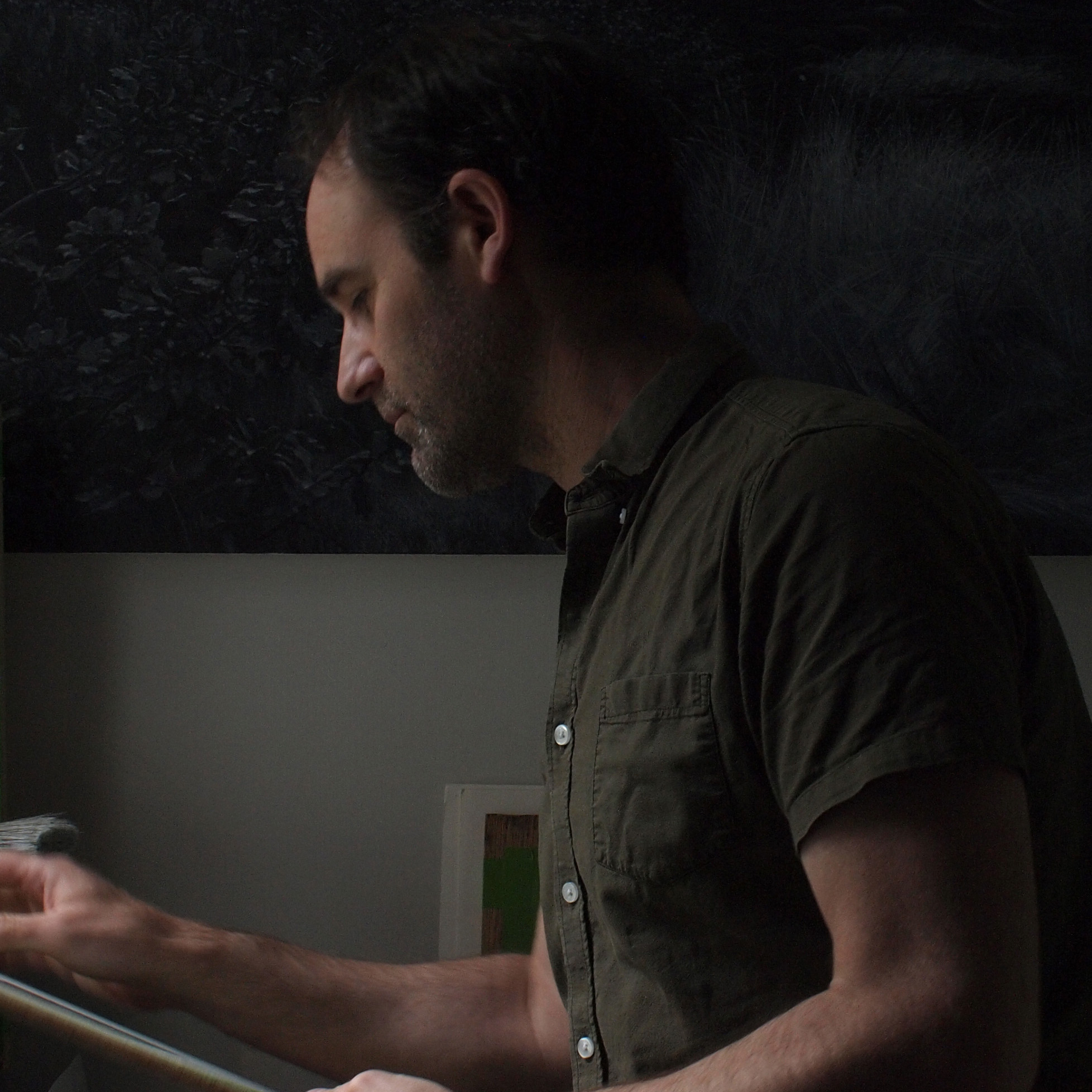
Nicholas Middleton (b. 1975, London, UK) attended London Guildhall University in 1993 and transferred to the Winchester School of Art in 1994, earning his BA in 1997. He joined the Royal College of Art in 2016 and completed his practice-based PhD in 2024. Middleton currently lives in London, where he teaches at the City & Guilds of London Art School. A six-time finalist for the John Moores Painting Prize, he won the Visitor’s Choice Award at the 24th John Moores Painting Prize in 2006 for his black-and-white hyperrealist oil painting, Scene from a Contemporary Novel. In 2010, he received both the John Moores Painting Prize and the Visitor’s Choice Award for Protest, 1st April 2009, a black-and-white hyperrealist oil painting depicting demonstrations outside the Bank of England. His work, Figures in an Arch, was shortlisted for the John Moores Painting Prize in 2016. Middleton believes that an image, as a representation of the world, naturally excludes everything “outside the frame,” such as spatial or temporal absence, or elements on the margins of the paper that float outside the picture. However, not everything “outside the frame” influences the content within. His interest lies in how these “out-of-frame” voids can be structurally utilized to actively and meaningfully engage in artistic creation.
Greet Van Autgaerden
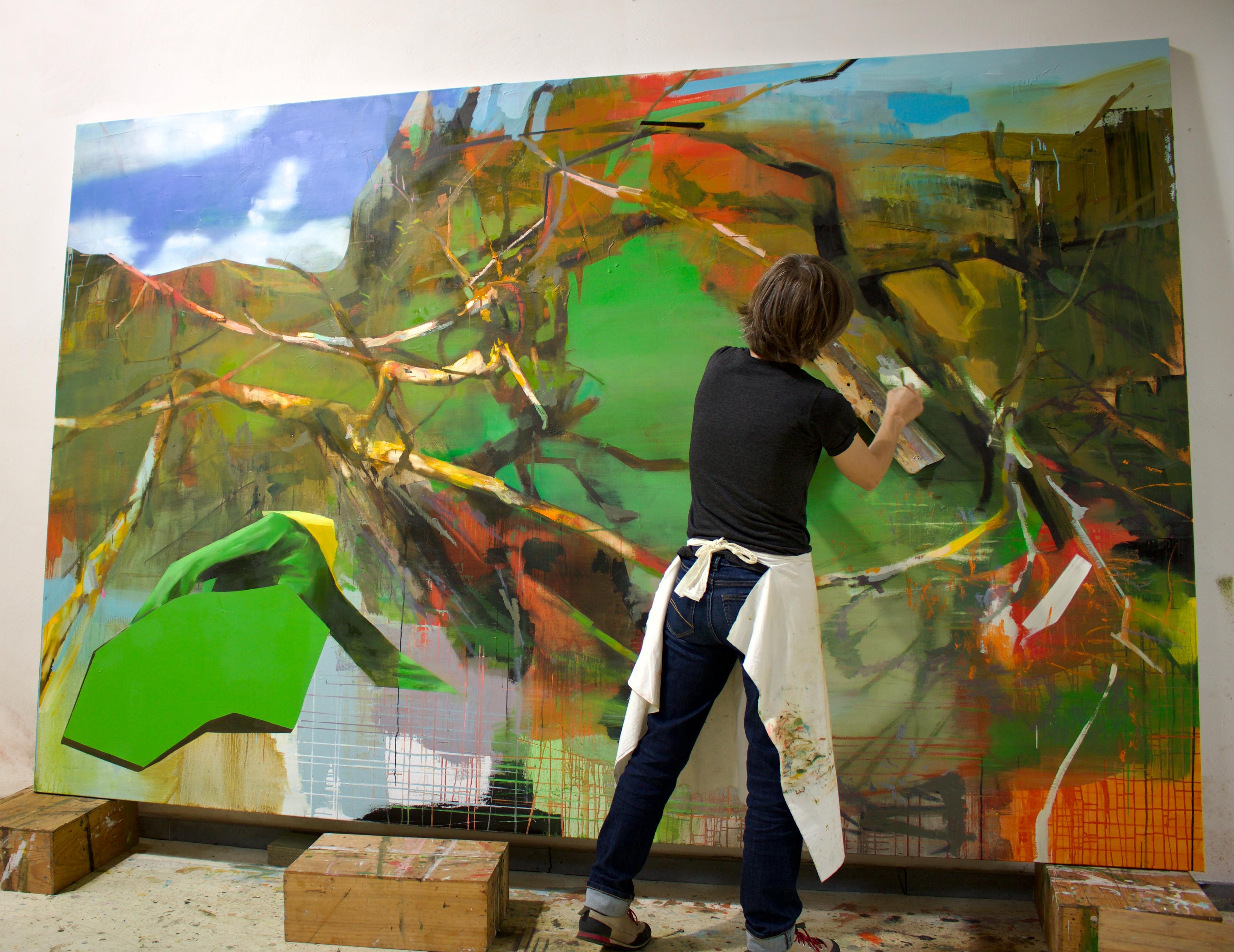
Greet Van Autgaerden (b. 1974, Brussels, Belgium) earned an MFA in Visual Arts from St-Lukas Hogeschool Brussel in 1998 and a BMus in Piano from the Koninklijk Conservatorium Brussel in 2001. She now lives in Mechelen and teaches at the Beeldacademie Lier.
Van Autgaerden’s work primarily explores the relationship between nature and culture, exploring the various forms of relationship between us and landscapes, particularly as depicted in paintings. She investigates the history and geological origins of landscapes, both literally and metaphorically. While landscape painting has been a major genre in art history—ranging from decorative to symbolic, from joyful to majestic, from panoramas to floral still lifes—nature remains ubiquitous in art. Van Autgaerden is not a traditional landscape painter. Her expressive use of color and brushwork makes her works far from realistic representations. In essence, her art focuses on perception itself: as humans, we observe landscapes, but what do we truly see? From an artist’s perspective, she aims to translate her perceptions and insights onto the canvas, aware that no “true” image exists. Perception varies from person to person, whether in nature or in art. Her distinctive brushwork and visual language invite viewers to engage as if they were physically within the “landscape.” Her preference for large-scale formats transforms viewers from passive observers into active participants, navigating the tension between perspective and the experience of orientation and disorientation—key elements that give meaning to both form and content.
Event Registration
- Home
- 學習
- Current Events
- 【Talk】A Shifting Harmony